Aligning privacy-by-design principles with real-world usability

The Federation Wallonia-Brussels aimed to facilitate citizens’ access to diverse media and cultural content, beyond social platforms.

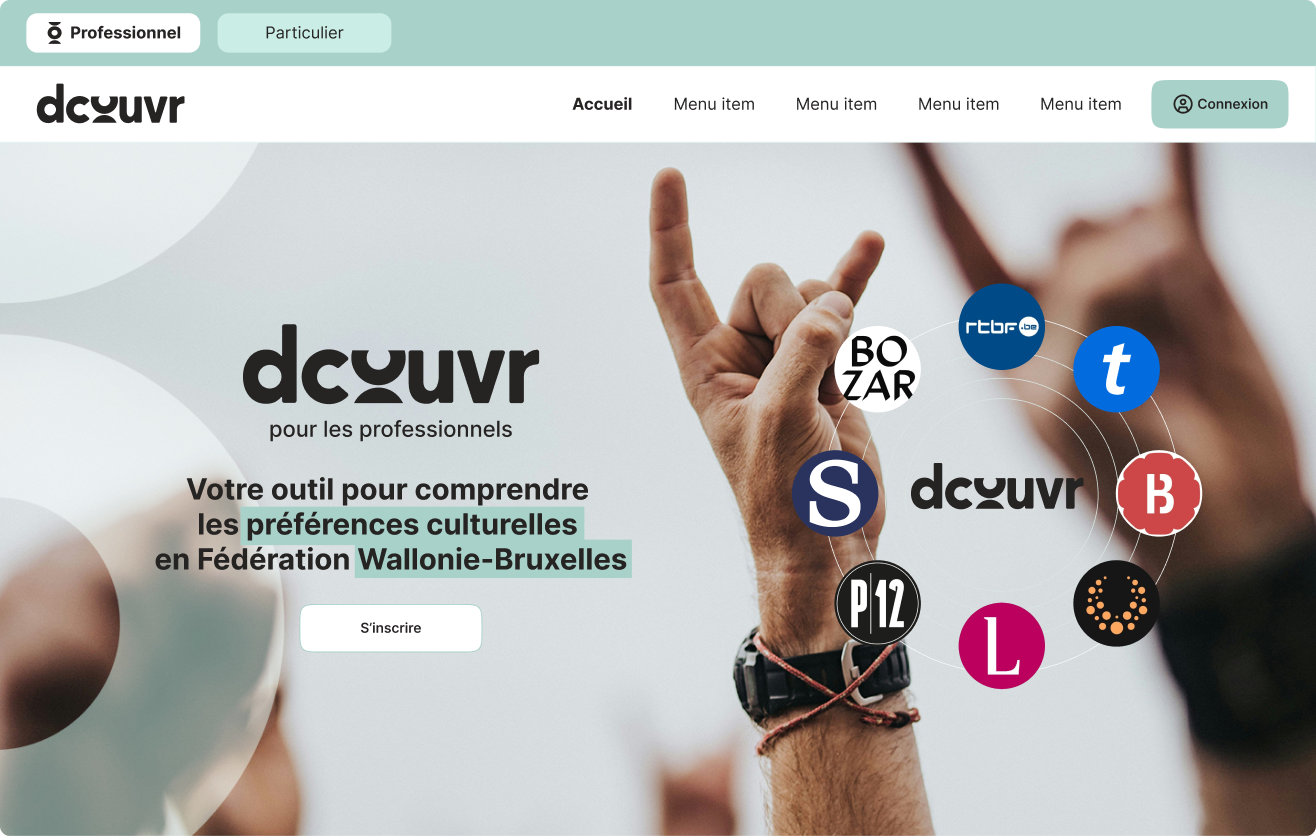
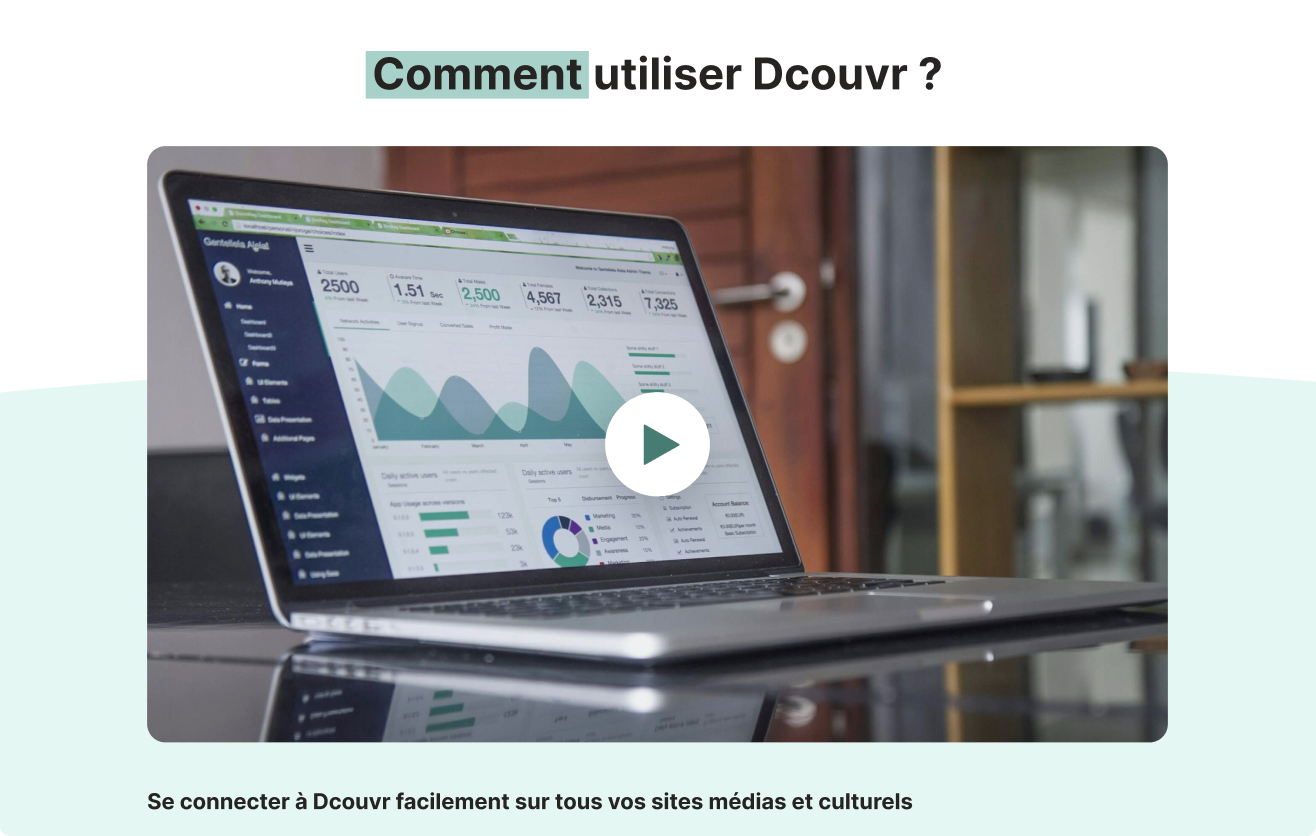
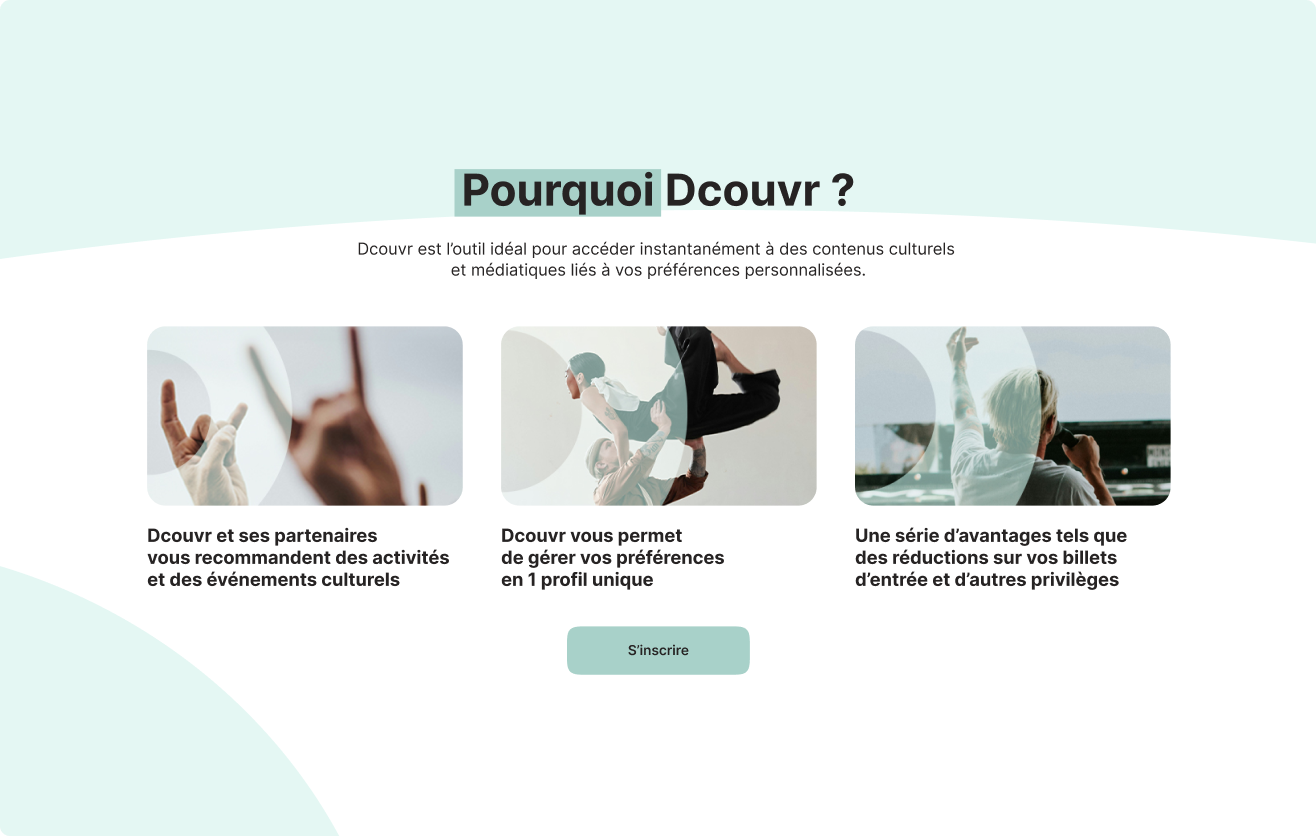
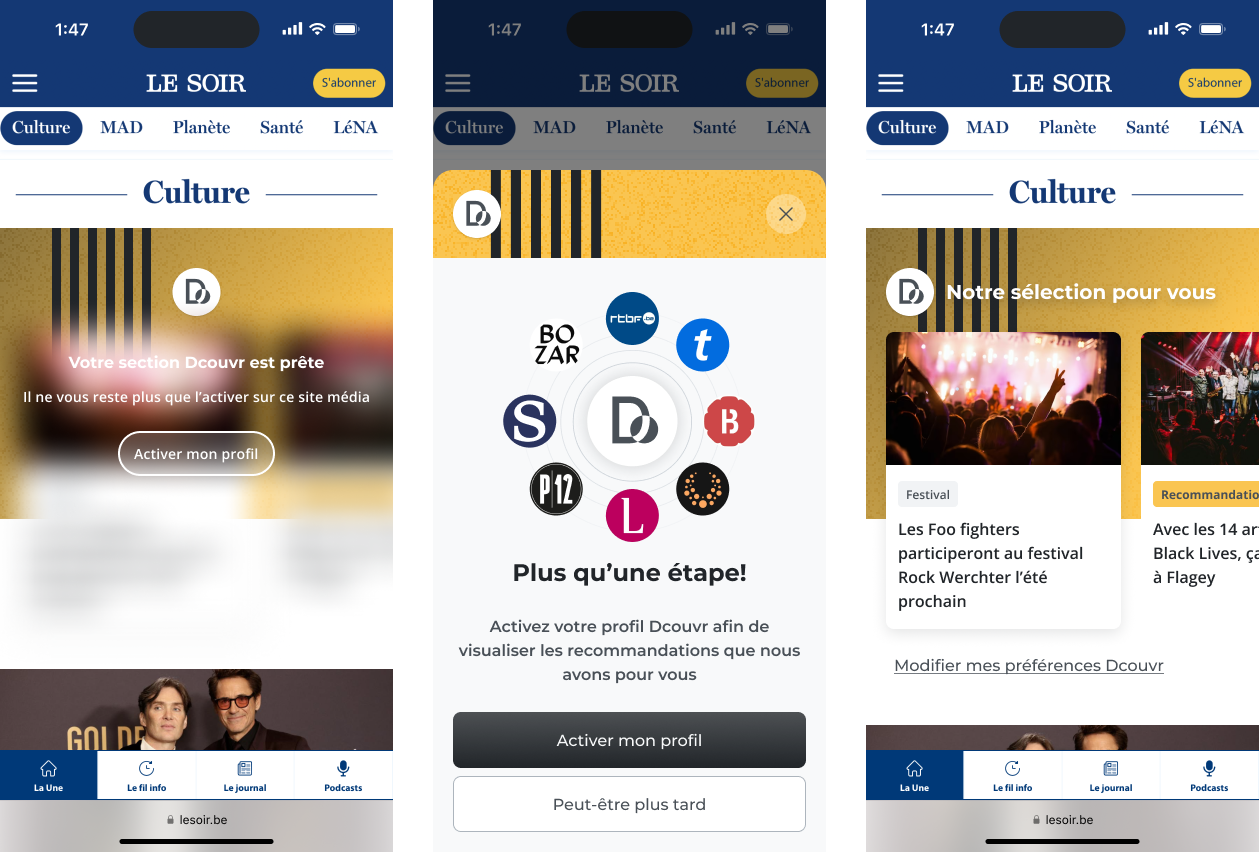
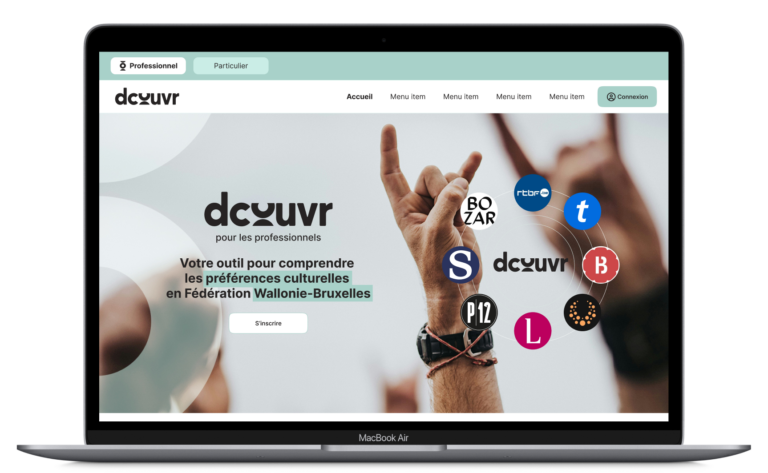
The DCouvr project is a three-year research and innovation initiative (from January 2023 to January 2026) aimed at developing digital tools to enhance the discoverability of content from cultural and media operators within the Federation Wallonia-Brussels (FWB).

Media, Culture

Public Sector

01. Challenge

Dcouvr wanted to design a citizen-centered solution that ensures the sovereignty of personal data and adopted by all stakeholders (media, citizens, institutions).

02. Approach

We implemented a comprehensive design thinking approach:

  • In-depth user research (interviews, focus groups)
  • Mental model development, ideation workshops, wireframes
  • Moderated user testing to validate concepts

03. Impact

As a result, we achieved :

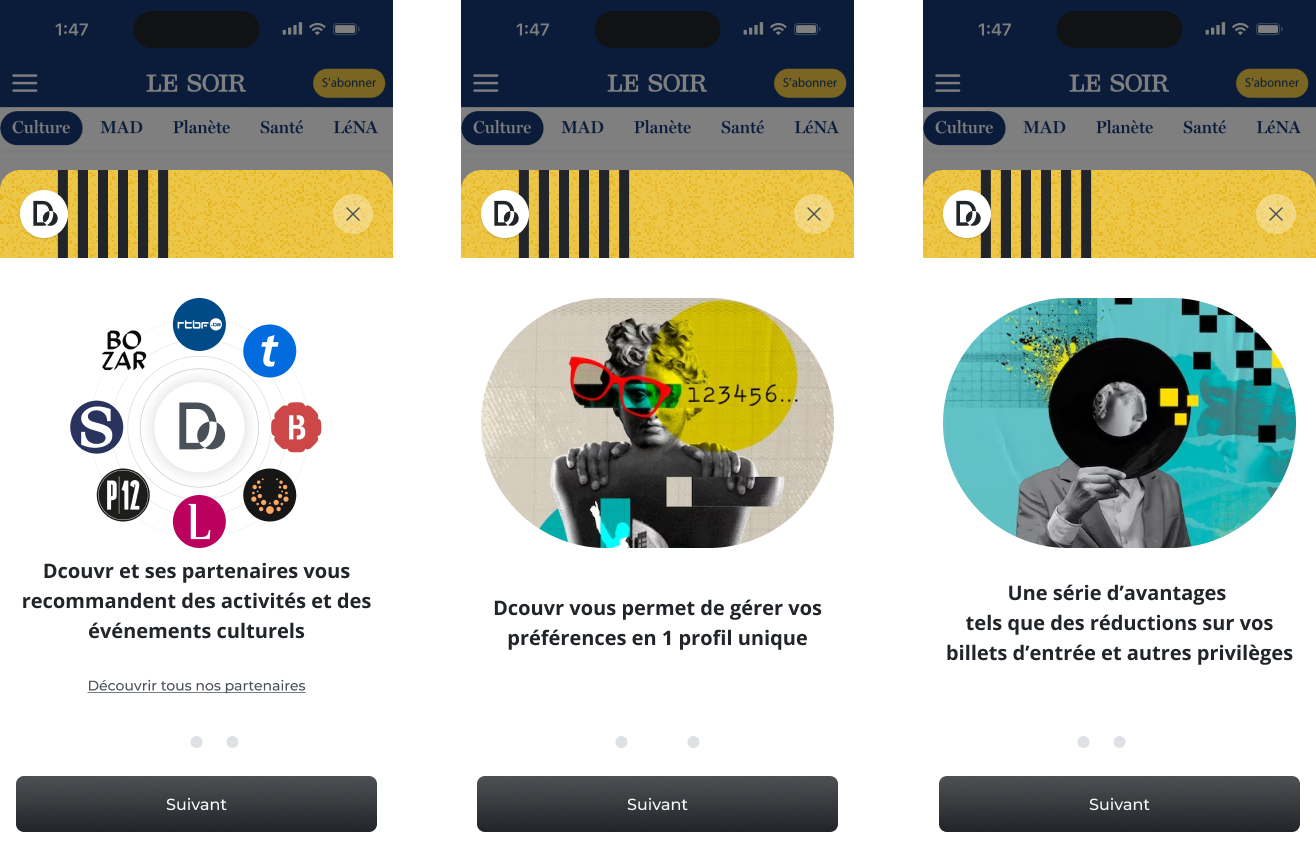
  • Designing a viable and desirable prototype for all stakeholders
  • Defining a sovereign personalized experience
  • Strong stakeholder engagement from the early phases

01. Challenge

Dcouvr set out to design a citizen-centered digital identity solution that guarantees personal data sovereignty, while securing the trust and adoption of a diverse ecosystem — from media players to public institutions and everyday users.

The challenge lay in aligning privacy-by-design principles with real-world usability and ensuring the platform could respond to the needs and concerns of all stakeholders involved.

"Designing for trust was at the heart of our mission. We had to translate abstract notions like data sovereignty into something concrete, intuitive, and meaningful for citizens — all while aligning with the expectations of institutions and media stakeholders. It was about finding that delicate balance between control, transparency, and simplicity."

Barbara Larcin
Service Designer @ JEMS

02. Approach

To address this multi-stakeholder challenge, we implemented a comprehensive design thinking approach grounded in user empathy and iterative validation.

We began with in-depth qualitative research, including interviews and focus groups, to understand citizens’ expectations around data ownership and digital identity. This input fed into the development of mental models and co-creation workshops, helping us align diverse perspectives into clear design principles. We then translated these insights into wireframes and prototypes, which we tested with users in moderated sessions to iteratively refine the experience and ensure clarity, trust, and accessibility.

03. Impact

As a result, we achieved :

A sovereign and user-centric experience

We defined a personalized identity model that gives citizens control over their data without compromising usability or trust.

Alignment across diverse stakeholders

The collaborative process fostered early engagement from institutions, media, and users — ensuring buy-in and shared ownership of the solution.

A validated, scalable prototype

Through iterative design and testing, we delivered a functional prototype that meets real-world expectations and sets the foundation for future development.

Not sure where to start?
Good news — we do.

Let’s shape what’s next.

Book a free strategic consultation and turn your ideas into actionable solutions. We’ll help you clarify your challenges, explore opportunities, and shape what’s next — together.

Free of charge

Yep, first meeting is on us :)

No commitment

You sleep on it and let us know !

These cases might also interest you

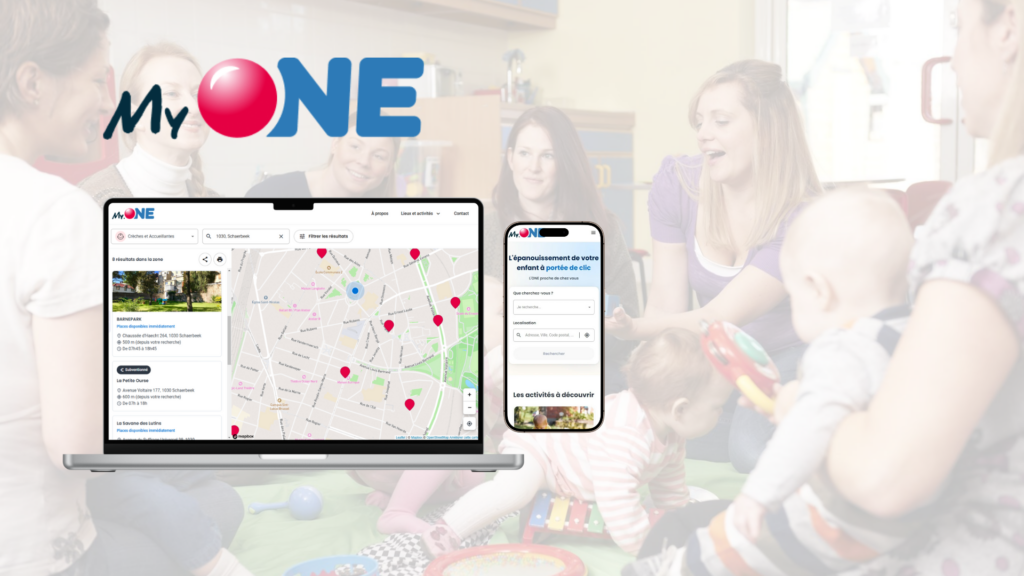
MyONE_illustration case

ONE

Optimizing internal organizational processes to develop a local, high-quality digital portal centralizing key information for young parents.

Dstny

Revamping the software's user experience by developing a comprehensive app that is easy to maintain and allows for the addition of new features.
Jems Benelux
Privacy Overview

This website uses cookies so that we can provide you with the best user experience possible. Cookie information is stored in your browser and performs functions such as recognising you when you return to our website and helping our team to understand which sections of the website you find most interesting and useful.