Empowering teams from various acquisitions to craft a seamless and unified user journey
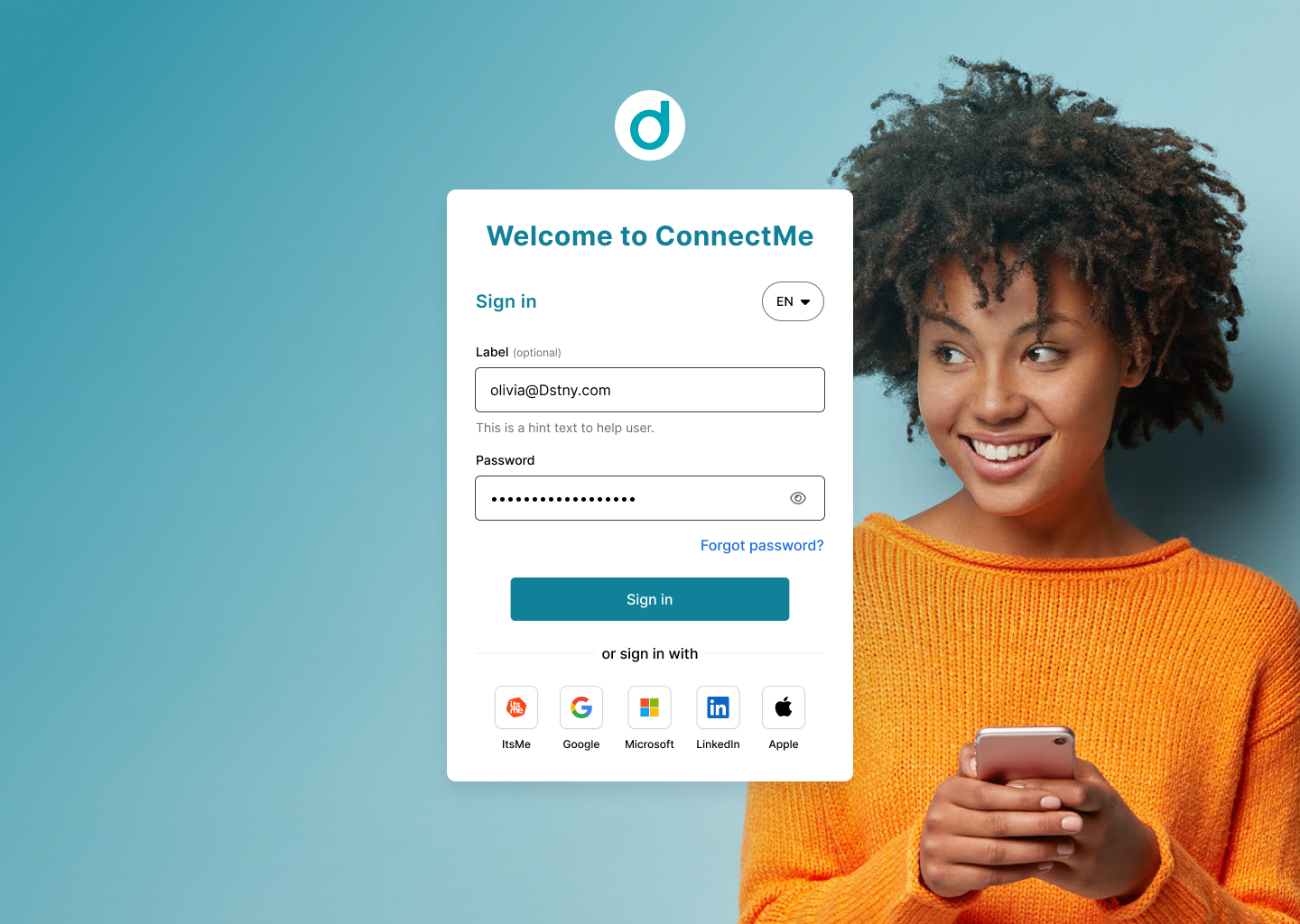
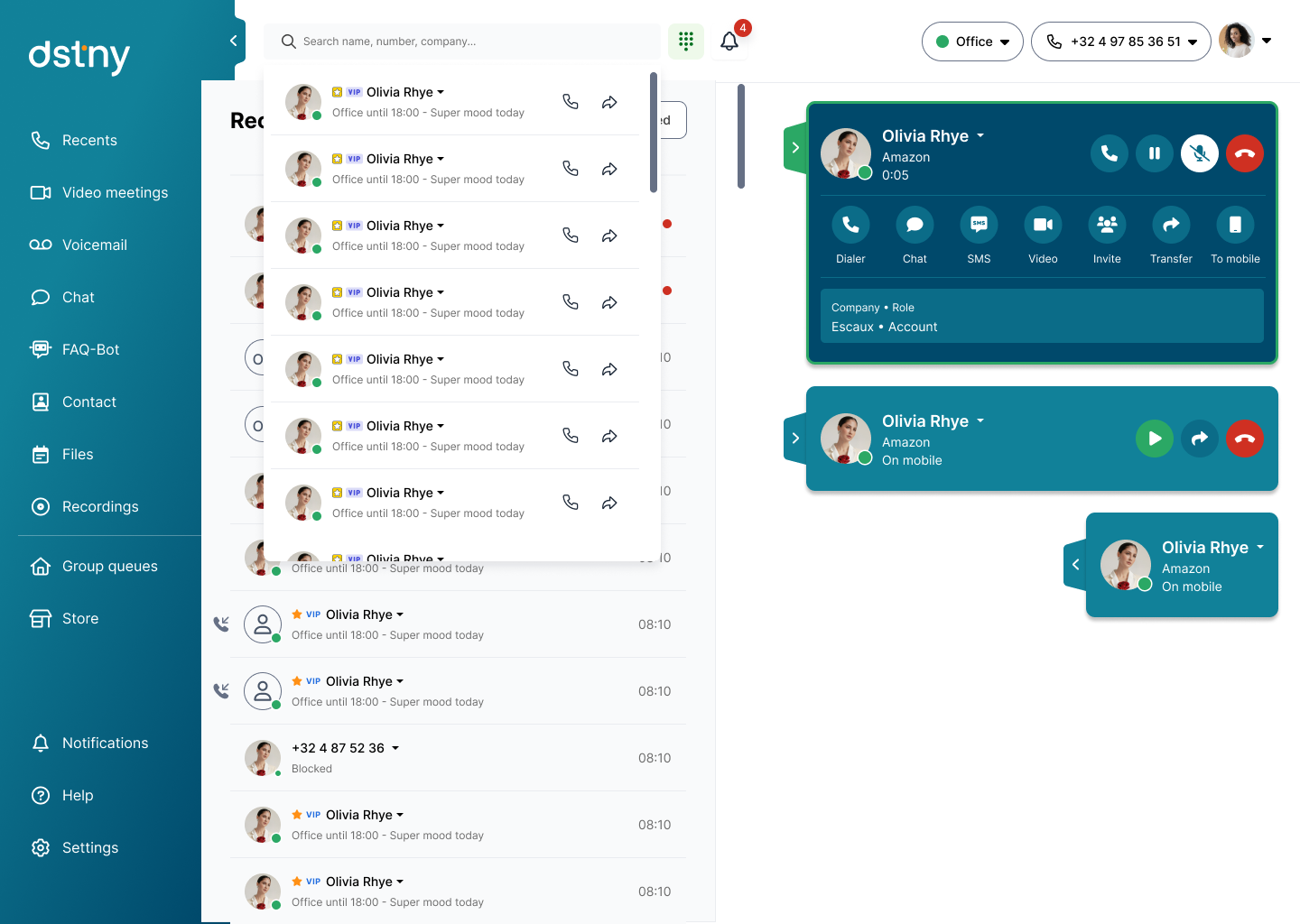
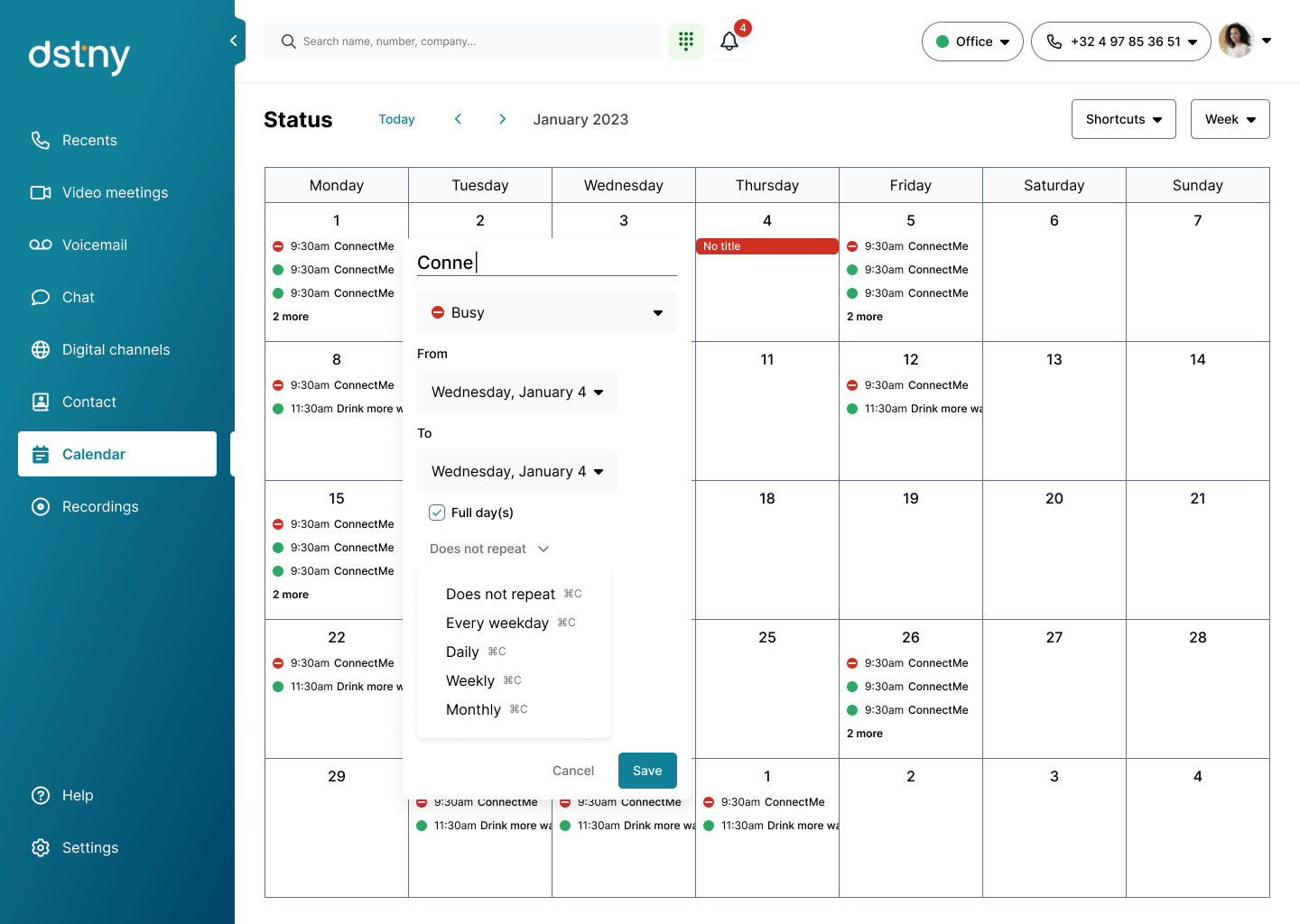
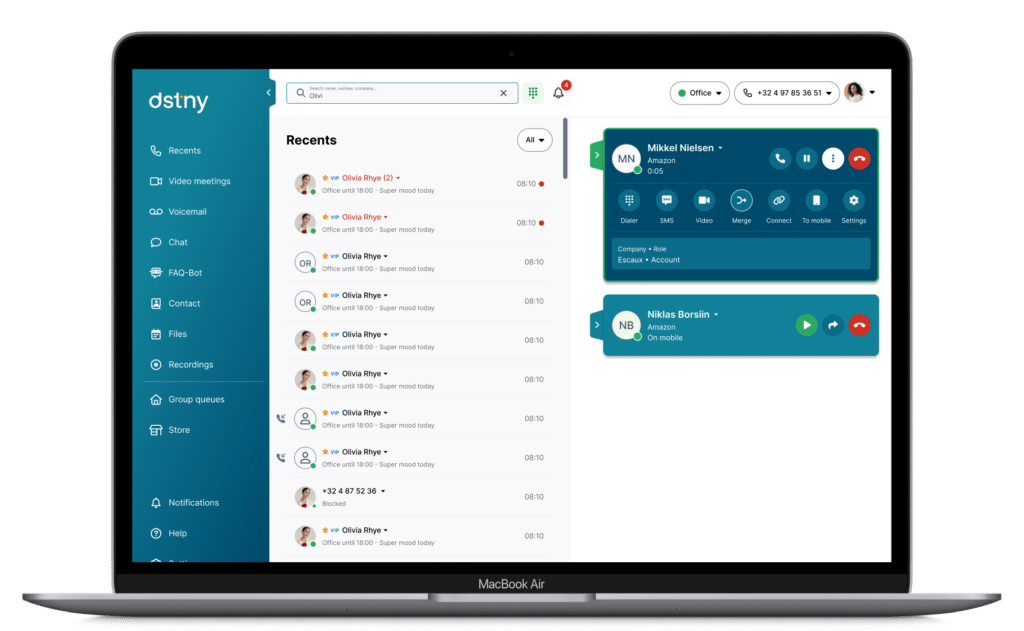
We completely revamped the ConnectMe solution to support the international expansion of Dstny. Our main goal was to create a unified UX strategy that integrates teams herited from various acquisitions.
Dstny is a European leader and innovator in secure cloud communications. Their tools and technology help over 2 million businesses communicate, collaborate, and manage their customer service. Headquartered in Brussels, Dsnty counts more than 700 employees in 7 European countries and an annual turnover of nearly €190 million.
Telecom
B2B
01. Challenge
Dstny faced a lack of interface consistency, resulting in difficulty in aligning user journeys between different product entities and countries.
02. Approach
We implemented a steering team of UX and Dev with:
- Close collaboration between UX, PO, and Dev
- Multi-product design system, global governance
- Agile rituals and shared tools
03. Impact
As a result, we achieved :
- Increased UX maturity of teams at the group level
- Harmonization of experiences between products
- Establishment of a cross-functional UX culture
01. Challenge
Following a series of acquisitions, product teams operated with differing practices, tools, and design standards. This led to fragmented interfaces and inconsistencies in user journeys across countries and product lines. The lack of a shared UX vision made it difficult to deliver a seamless and coherent experience to users, while also complicating collaboration between teams.
02. Approach
To address these challenges, we established a cross-functional steering team bringing together UX and Development leads.
This structure fostered close, ongoing collaboration between UX designers, product owners, and developers across all product lines. We introduced a multi-product design system supported by centralized governance, ensuring consistency without limiting local adaptability. By embedding shared agile rituals and tools, we aligned workflows and encouraged continuous alignment across teams, paving the way for scalable, user-centered delivery.
03. Impact
As a result, we achieved :
A significant boost in UX maturity across group-level teams, enabling more user-centered decision-making and fostering a shared language around design excellence.
Greater consistency and coherence across product experiences, improving usability and reinforcing brand trust throughout the ecosystem.
The foundation of a cross-functional UX culture, bringing together designers, developers, product owners, and stakeholders around common user-centric principles and practices.